
Oswego Directory Names in Minutes
County-board minutes can anchor a public role to one meeting date, while naturalization series may clarify name variants or origin. Neither source replaces a residential entry, but both can distinguish people who share a name and guide the next records search.
Oswego Directory Collections by Era
Oswego does not have one verified, complete run of residential Polk volumes. Its historical directory is a set of related collections. The earliest named listings are town and business pages. Later sources add newspapers, school yearbooks, maps, and official county series. The right first source depends on the date and the relationship being tested.
| Collection | Years | Where Held | Access |
|---|---|---|---|
| Oswego business pages | 1852, 1866, 1867, 1868, 1875 | Kendall historical genealogy collection | Digitized or transcribed pages |
| Local newspapers | 1864 to 2015, title-specific | Oswego Public Library | Microfilm and databases |
| School yearbooks | 1938 forward | Oswego Public Library | Local-history collection |
| Sanborn maps | 1885, 1892, 1898, 1905, 1931 | University of Illinois | Holdings list; scan link not shown |
| Kendall official series | Series vary from 1841 | County offices and IRAD | Catalog, request, or visit |
This coverage table is a discovery map, not proof that each item is online. A city directory citation should retain its title, date, page, and whether the item is an index, transcription, image, or original.
Oswego Library's Directory Shelf
The Oswego Public Library genealogy collection is the best broad first stop. It combines family histories, maps, yearbooks, society journals, newspapers, and licensed databases. Kendall County Record spans 1864 to 2015; Kendall County News covers 1881 to 1974; Oswego Ledger runs from 1951 to 2014. Fox Valley Sentinel and Prairie Times add shorter periods.
The library also names HeritageQuest, Ancestry Library Edition, FamilySearch affiliate access, and newspaper archives. Some tools require a library computer. No stand-alone searchable Oswego obituary index was found, so bring an estimated date, name variants, initials, and any business or street term that may narrow a microfilm search.
The library page shows the city directory research route.
The captured page confirms the mix of local sources and access options available to researchers.
Read an Oswego Directory Entry
The 1852 source does not read like a later household book. It identifies people through ads, public roles, trades, and landmarks. Preserve what the line says before adding evidence from another source.
| Name | A person, proprietor, partner, agent, or official |
|---|---|
| Work | The occupation, trade, office, or service |
| Place | A landmark, street side, or distance from a building |
| Role | Postmaster, proprietor, partner, or agent |
| Citation | Publication date and newspaper or directory title |
An office address does not prove the named person lived there. Confirm residence with a census, tax book, deed, obituary, or another dated source.
- Criss-cross directory
- A list arranged by address instead of surname. No complete Oswego run was verified.
- Householder index
- An address or household list that can distinguish residents from businesses.
- Abbreviation key
- The volume's guide to shortened terms. Save it with the entry so marks are not guessed.
Oswego Landmarks Become Address Clues
The September 1852 business directory places firms “opposite National Hotel” or “two doors south of post office.” Such phrases show how the town was navigated. They must not be silently converted into a modern street number.
Collect all entries that share the landmark. Compare a period map, later business page, plat, and newspaper. National Hotel, also called Kendall House, is useful because the first circuit-court term was held there when Oswego was county seat. A legal notice may place a person through that public hub even when no home address remains.
Note: Landmark wording shows proximity, not ownership or residence, until a second dated record makes the connection.
Oswego Museum House-History Files
The Little White School Museum archive has photos, papers, diaries, scrapbooks, plat books, histories, indexes, and newspaper transcriptions. It is at 72 Polk Street. Inspected hours list Thursday 10:30 a.m. to 4 p.m. and Saturday 9 a.m. to noon, with appointments preferred. Call 630-554-2999 or send a focused request.
Name the street or landmark, rough years, former owner or business, and exact question. Ask if a photo, tax book, family file, plat, or transcription links the clue to the site.
The museum research page documents this access channel.
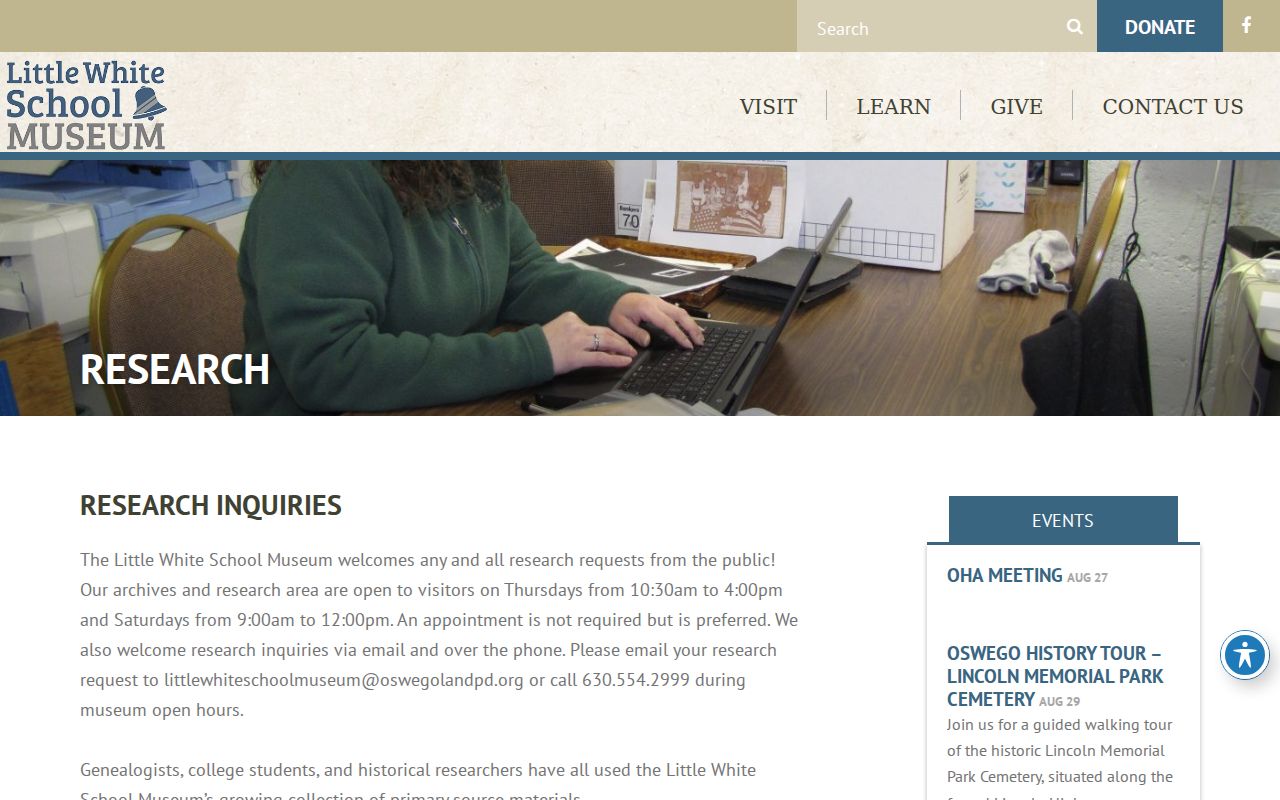
The request route can bridge gaps left by online directory indexes.
The Oswegoland Heritage Association helps operate the local history program.
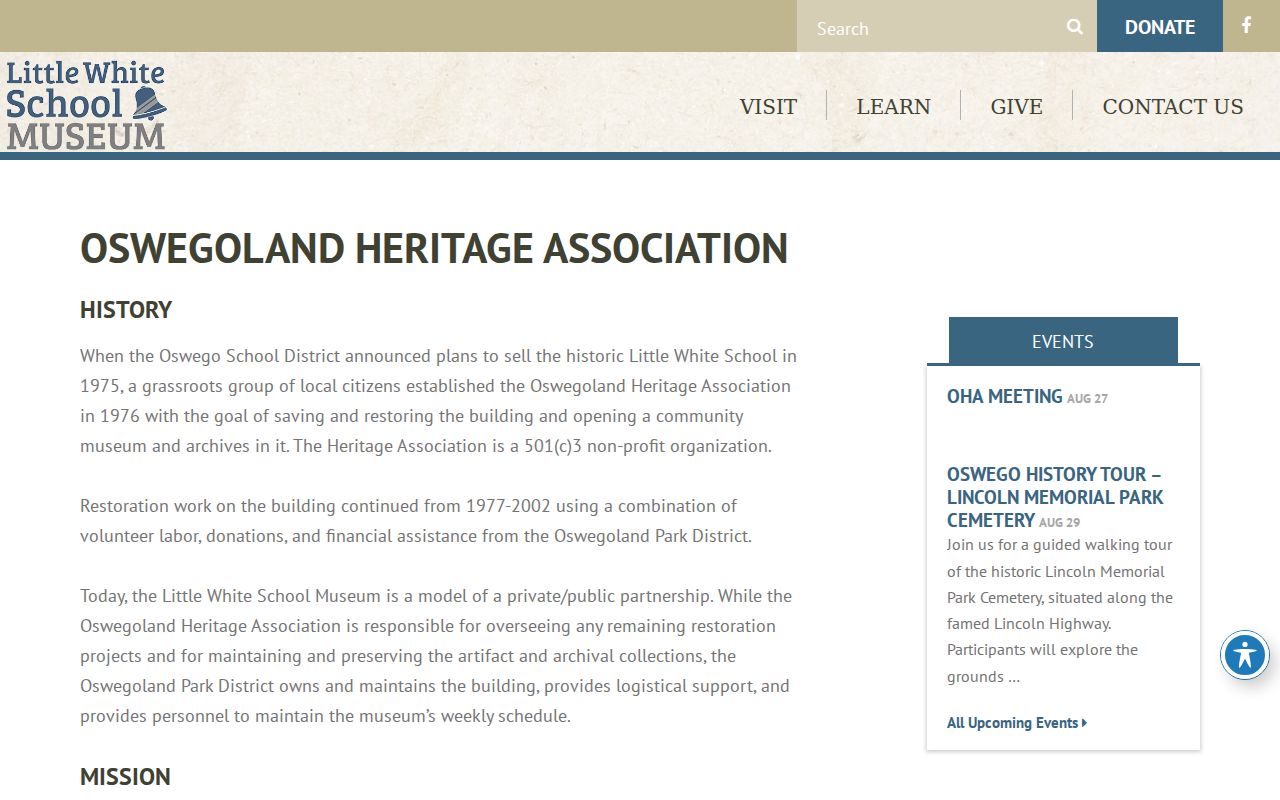
This partnership explains why museum holdings span both artifacts and family research files.
Oswego Directory Clues in Yearbooks
For a classmate search, library yearbooks for Oswego High School, Oswego East, and selected schools begin in 1938. A yearbook proves a dated school tie, not a current address. A missing name can reflect a transfer, absence, nickname, or an incomplete run.
Check the name against reunion notices, graduation lists, marriage announcements, and obituaries in the named newspapers. Keep maiden names, initials, and middle names in the search set. Each new record should add a date and a clear relationship.
Class lists are also useful when two Oswego residents share the same name. A school, activity, or graduation year can separate them without assuming that either later address belongs to the student. Follow that dated identity into a marriage index or newspaper archive, and cite the new record on its own terms.
Oswego Directory Maps Across Five Years
The University of Illinois Sanborn holdings list two Oswego sheets for 1885, 1892, 1898, and 1905, plus three for 1931. They show footprint, use, street context, and nearby structures, not every occupant.
Compare one site across all available years. Then search the interval in newspapers, tax books, deeds, or city directories. Map change becomes persuasive only when a dated person record agrees.
The map year should always stay in the note. A building shown in 1931 cannot be projected backward to an 1852 business notice. Likewise, a shop label does not establish that the proprietor owned the parcel or lived above the store. The map supplies place evidence; a dated city directory or official record supplies the person link.
Oswego Directory Records Moved West
Oswego served as Kendall County seat from 1845 until offices moved to Yorkville in 1864. County court, probate, land, naturalization, and board books may now be with a county custodian or IRAD, not the Village. Search by keeper and date as well as town.
An 1887 courthouse fire is documented, but no official series-by-series loss list was found. Do not assume a missing volume burned. Triangulate with newspaper microfilm, cemetery data, the 1876 taxpayer and voter directory, probate, and family collections.
The move also explains why a person can appear in an Oswego newspaper or city directory source while the official companion record sits in Yorkville. Search county-board minutes, court series, and land books under Kendall County. Then return to the library or museum for the local story around the formal filing.
IRAD series descriptions can narrow a request before anyone asks for a volume. Kendall research guides place marriage records from 1841, birth and death records from 1877, assessor books from 1845, mortgages from 1856, and land records from 1841. Those dates describe archival series, not universal online image coverage. Record the series title and date range, then ask the archive or county office what format is available.
Trace Oswego Directory Families
Since Oswego city directories are episodic, family research works as a run of dated checks. Keep residence, business activity, and appearance at a site as separate labels.
- Choose an era and begin with the nearest directory, newspaper, yearbook, or map.
- Search initials, surname variants, married names, business names, and landmarks.
- Connect the person to a deed, marriage index, probate, tax book, or naturalization file.
- Pair directory evidence with federal census schedules available through 1950.
- Close the trail with an obituary, cemetery entry, or later county notice.
If a person disappears between dated sources, test several explanations. The family may have moved, the spelling may have changed, the business may have closed, or that source year may be missing. A later obituary can name a former town, while probate or a deed can explain how land passed to relatives. Do not turn absence into a death or move without that support.
Illinois county marriage indexes add spouse, parent, place, and date clues, while probate files may contain wills, inventories, guardianships, and estate papers. Exact Kendall image coverage varies in the statewide genealogy collections. Treat a search result as an index lead until the corresponding record or custodian description confirms its county and date.
Township cemetery sources offer another dated check. Oswego Main Street, Pearce, and Cowdrey cemetery searches can connect burial to an obituary, church reference, probate case, or tax record. Burial in an Oswego-area cemetery does not prove that the person lived at a particular Oswego address, but it may supply the date needed to search library microfilm efficiently.
The 1876 Kendall taxpayer and voter biographical directory and the 1877 county history provide broad county context between early business pages and later newspapers. A taxpayer label, like a business label, must not be rewritten as a household claim. Note exactly why the person appears, then look for residence evidence in the nearest census, land book, or dated notice.
For address-first work, the Oswego previous residents search follows one parcel backward without treating a catalog listing as household proof.